

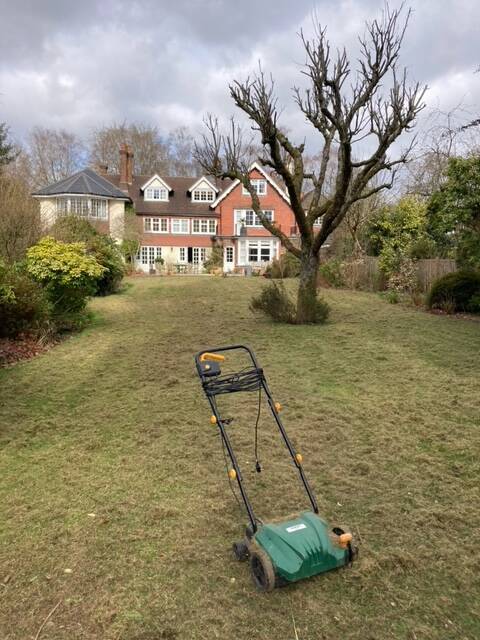
Every spring there is a moment when garden owners step outside, take a long look at their lawn after winter, and think: “What on earth happened here?”
Patchy grass in early spring is extremely common in gardens around Haslemere, SW Surrey and the surrounding villages. Winter brings heavy rain, low light levels, compacted soil and the occasional moss invasion. Lawns that looked perfectly respectable in October can look rather sorry for themselves by March.
The key thing to remember is that lawns are surprisingly resilient.
First rule and most importantly: Don’t overreact if your lawn is patchy!

Most lawns simply need a bit of practical attention rather than dramatic intervention. Grass has an extraordinary ability to recover when given the right conditions.
Why Do Lawns Become Patchy After Winter?
There are three common causes.
1. Compacted soil
Winter rain and regular foot traffic compress the soil, squeezing out the air pockets that grass roots depend on. When this happens, growth slows and thin areas appear.
The solution is aeration. A garden fork or hollow-tine aerator loosens the soil and restores airflow to the roots. Think of it as giving the lawn a chance to breathe again.
2. Moss competition
Moss thrives in damp and shaded conditions and often spreads through lawns during winter while grass growth is slow.
Removing it requires scarifying, which can look a little alarming the first time you do it. Be warned the lawn may briefly resemble a bad haircut.
Don’t be too precious when it comes to scarifying!
It may look dramatic for a week or two, but grass usually recovers quickly once the moss layer has been removed.
3. Weak or unsuitable grass seed
Some lawns are originally laid with fast-germinating seed mixes that look impressive at first but struggle to establish long-term resilience.
Overseeding with a better quality seed mix suited to your soil and light conditions can make a noticeable difference within a few weeks.

A Simple Plan for Lawn Recovery
Most patchy lawns respond very well to a straightforward spring routine:
-
Scarify to remove moss and dead material.
-
Aerate the soil to relieve compaction.
-
Overseed thin areas with a suitable grass mix.
-
Top dress lightly if the soil structure needs improvement.
-
Water and give it time.
Lawns rarely recover overnight, but they almost always improve steadily once these steps are taken.
Keep Things in Perspective
Gardens, like all living things, have good seasons and bad ones. Weather changes, soil conditions vary, and even well-established lawns occasionally look a little tired.
Don’t take a patchy lawn too much to heart.
A calm approach, a bit of practical work and a willingness to accept that nature sometimes has its own plans will solve most problems.
Above all, maintain a sense of humour – gardens rarely behave perfectly and things don’t always go to plan.
And if your lawn still looks like it’s having a difficult spring, it may simply need a more considered rescue plan.
Garden Rescue in Haslemere
Olli Thomas Garden Rescue specialises in reviving and managing established gardens across Haslemere, SW Surrey, NE Hampshire and West Sussex.

Add comment
Comments