


The average asking price of a newly listed home fell by £7,360* this August—which is a rather substantial sum to mislay while everybody is in Alicante.
*According to Rightmove, it was the largest August fall for eight years. There are also more homes competing for attention than would normally be expected at this point in the summer. Fortunately, autumn traditionally brings a second flurry of activity as the schools reopen, holidays end and couples across the country suddenly decide they absolutely must be living somewhere else by Christmas.
That presents sellers with an opportunity. It also means that when buyers return, they will have plenty of gardens through which to wander slowly, making thoughtful noises and silently reducing their offer.
(Need help? Click here to contact Olli for a free consultation and quote)
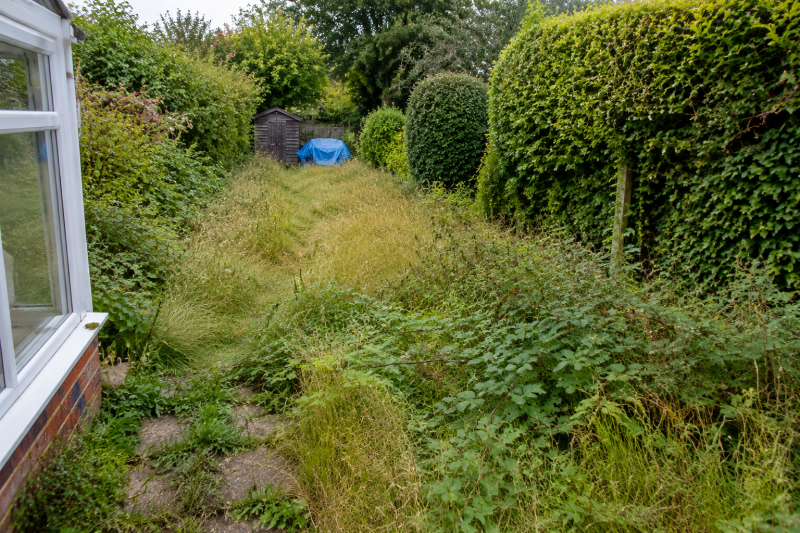
The Viewing Begins at the Gate
A house viewing does not begin when the estate agent unlocks the front door. By then the buyers have inspected the photographs, studied the floor plan, looked at the road from space and driven past at least once pretending to be lost.
Your front garden is the first part of the property they meet.
An overgrown hedge can make the entrance feel narrow and the house appear smaller. Shrubs covering windows reduce light before anyone has stepped inside. Weeds through the paving, fallen branches and three empty compost bags blowing around the driveway may suggest that maintenance elsewhere has been approached with similar enthusiasm.
None of these is necessarily a serious problem. Buyers are not conducting a fair and balanced horticultural assessment, though. They are collecting clues—and once they decide a property has been neglected, every stiff door and slightly suspicious patch of ceiling joins the prosecution.
A clear path, visible frontage and properly shaped planting quietly suggest that somebody has been paying attention.
(Need help? Click here to contact Olli for a free consultation and quote)
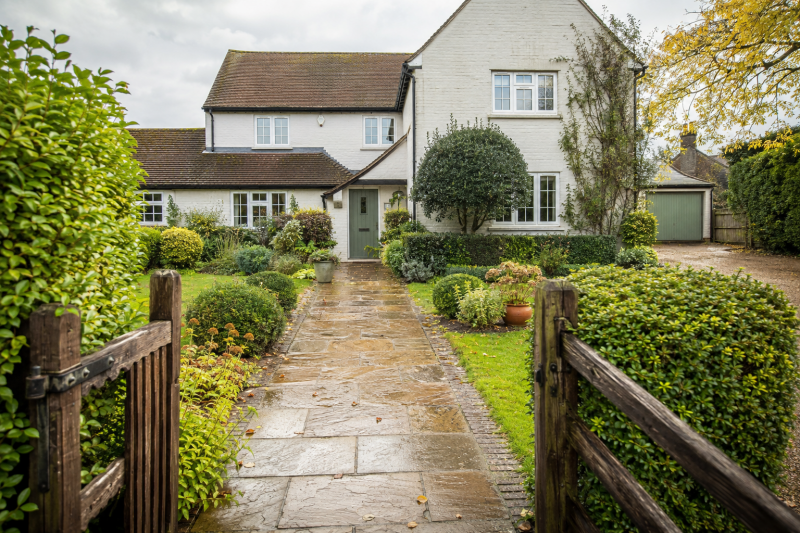
Do Not Build Your Dream Garden for Someone Else
Preparing a garden for sale is not the moment for a grand redesign.
You do not need an outdoor kitchen, a Mediterranean planting scheme or a water feature inspired by the gardens of the Alhambra. You are leaving. Spending thousands of pounds expressing your innermost personality through ornamental grasses would be an unusually generous farewell gift to people you have not yet met.
The job is to reveal what is already there.
Selective pruning can bring light into the house. Recutting lawn edges and defining borders makes the garden appear larger. Clearing a forgotten path reconnects areas that have gradually vanished. Removing dead, collapsing or badly placed growth allows buyers to understand the shape of the space.
That word selective matters. The answer is not to hire somebody with a chainsaw and an afternoon unexpectedly free. Indiscriminate clearance can destroy privacy, expose an ugly boundary and turn mature shrubs into a collection of stumps resembling the aftermath of a small medieval battle.
Keep the things that give the garden age, screening and character. Remove the things hiding them.
(Need help? Click here to contact Olli for a free consultation and quote)

Make It Look the Business—Without Looking Like a Full-Time Job
Buyers possess an extraordinary ability to convert one untidy corner into a major civil-engineering project.
A large hedge requiring a day’s work becomes “at least five thousand pounds”. A tired lawn apparently means excavating the entire garden and starting again. Three brambles behind the shed will require specialist machinery, a structural survey and possibly an exorcist.
The figures are usually nonsense. That does not matter. Once a buyer believes the garden contains expensive problems, the imaginary invoice has already been deducted from what they think the house is worth.
More importantly, most people buying a house already have a million things to do. There will be boxes to unpack, rooms to decorate, schools to organise, broadband engineers to pursue and one previous owner’s inexplicable electrical decision to investigate. Realistically, they may not touch the garden for six months.
It therefore cannot look as though it will fall apart while they are looking the other way.
Hedges should appear capable of surviving until spring without swallowing the pavement. Paths and patios should be clear enough not to require immediate attention. Shrubs need shape rather than perfection; borders need definition rather than an entire new planting scheme. A lawn can show the scars of summer, but it should look recoverable—not like the opening stages of an archaeological excavation.
The garden needs to feel stable, understandable and forgiving: somewhere buyers can enjoy immediately and improve later, when they have finally found the kettle.
That is what preparing a garden for sale really means. You do not need to make it look brand new. You need to make your garden look the business—and make keeping it that way appear reassuringly easy.
(Need help? Click here to contact Olli for a free consultation and quote)
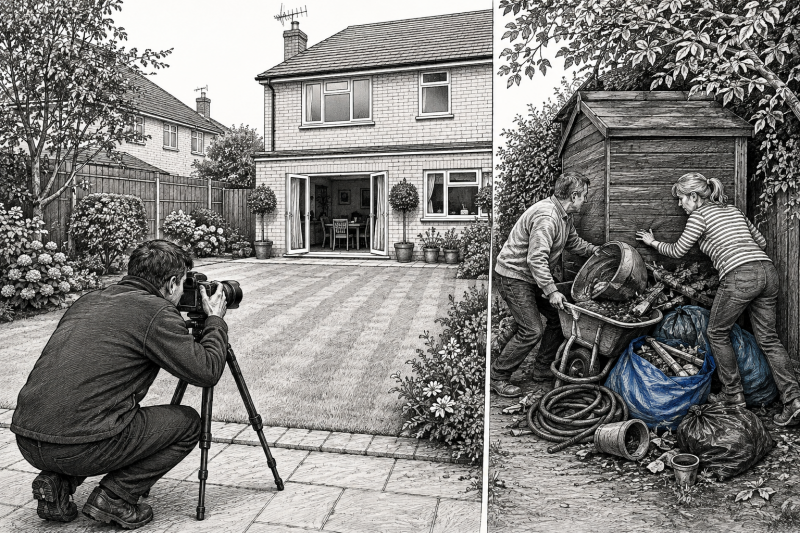
The Photographer Is Coming
The first viewing will probably take place on a telephone while the buyer is waiting for a train.
Your entire garden may initially occupy a photograph the size of a playing card. If that photograph shows a dark wall of vegetation, a yellow lawn and something enormous covered by a blue tarpaulin, the buyer may never discover the old apple tree, sunny terrace or excellent pub two minutes away.
This is why the garden needs preparing before the estate agent’s photographer arrives—not at 8.30 on the morning of the first viewing while one of you is frantically pushing broken pots behind the shed.
The lawn needs time to respond. Recently pruned plants need to settle. Green waste must leave the premises. Paths, seating areas and boundaries should be visible, and the photographer needs at least one position from which the garden appears to belong to the house rather than threaten it.
“Kerb appeal” arrived here from the American property expression “curb appeal”, which became popular during the great expansion of post-war suburbia. Online selling has given us something even more ruthless: thumbnail appeal.
If the picture does not earn the click, nobody reaches the kerb.
(Need help? Click here to contact Olli for a free consultation and quote)
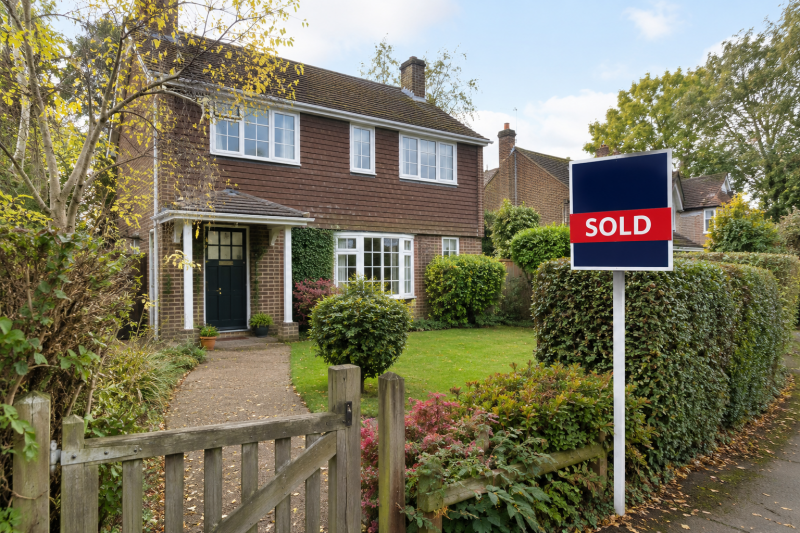
Make the Garden Earn Its Keep
Autumn buyers are returning to a market offering them more choice. Your garden must support the sale rather than supply the opening argument for a reduced offer.
Concentrate on the entrance, light, access, boundaries, lawn presentation and usable space. Reveal the garden instead of redesigning it. Above all, make it look attractive but low maintenance—capable of waiting patiently while its new owners attend to the other 147 things that moving house has unexpectedly produced.
Olli Thomas Garden Rescue provides a dedicated Prepare Your Garden for a House Sale service across Surrey, Hampshire and West Sussex. We assess which work will make the greatest difference, then prepare the garden before the photographer records the evidence for posterity.
You can also explore our garden transformations, find out what Garden Rescue actually does, or contact us before the estate agent arrives—and starts describing the brambles as “an opportunity to personalise”.
(Need help? Click here to contact Olli for a free consultation and quote)
Add comment
Comments