


(Observations from years spent rescuing gardens across Surrey, Hampshire and West Sussex.)
By almost any measure, this has been an exceptional summer. Long periods without meaningful rainfall, record-breaking temperatures and hosepipe bans across much of southern England have placed enormous pressure on gardens, parks and the wider landscape.
But for gardeners, the real story isn’t how little rain has fallen. It’s what the lack of rain has revealed.
Drought Wasn’t the Problem
Over the past few months we’ve visited gardens ranging from modest town plots to large country properties, and one thing has been remarkably consistent. The gardens that had been cared for steadily over many years have generally come through this drought surprisingly well. Those relying on last-minute watering or quick fixes have struggled far more.
When conditions are easy, almost every garden can appear healthy. It is only when nature turns off the taps that the true picture begins to emerge.
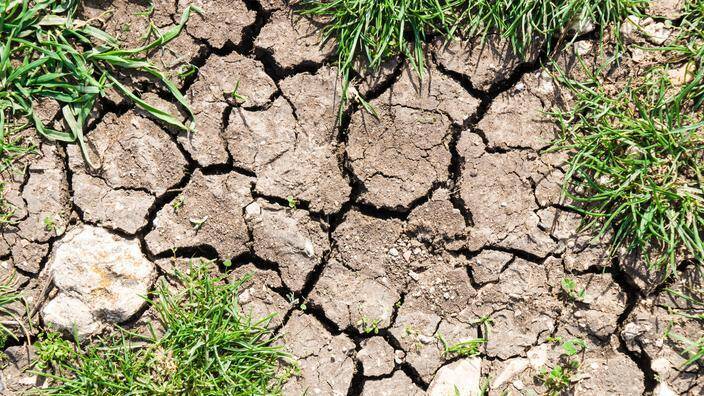
Every summer places gardens under a degree of stress. This summer simply turned that dial much higher. Like an engineer stress-testing a bridge, nature has exposed the strengths and weaknesses that were already there. Compacted soil became rock hard. Shallow-rooted lawns faded within days. Shrubs that had never really established themselves began to struggle, while neighbouring plants, growing in healthier soil with deeper roots, carried on with surprising resilience.
The weather may have been exceptional, but the pattern was not.

Resilience Is Built, Not Bought
The gardens that have impressed us most this summer haven’t necessarily been the largest or the most expensive. They have simply been the best prepared. Healthy soil, well-established roots and sensible planting choices have allowed them to cope with conditions that have left other gardens struggling.
That’s because resilience isn’t something that can be added at the first sign of trouble. It is created gradually through good horticultural practice. Every layer of organic matter worked into the soil, every season of careful planting and every year of thoughtful care strengthens a garden’s ability to cope when conditions become challenging.
There is a temptation during a drought to focus entirely on watering. Of course, water matters, but it is only one part of the picture. Two gardens can receive exactly the same amount of rain, yet perform very differently because one has spent years investing in its foundations while the other has not.
Healthy gardens are built over years, not rescued over a weekend. Water can sustain a garden for a while, but it cannot build healthy soil, deepen roots or undo years of neglect.
True resilience is built long before the rain stops falling.

A Garden Is Never Finished
One of the most revealing aspects of this summer has been how quickly some gardens declined while others remained remarkably resilient. The difference was not simply the amount of rain they received. It was often the continuity of care they had enjoyed over many years.
A garden is never truly finished. Unlike a new patio or a freshly painted fence, it is not a project that can be ticked off a list and forgotten. It is a living environment that is constantly changing. Every season strengthens it or weakens it. Every year of thoughtful care adds resilience, while every year of neglect quietly takes a little away.
We have seen this pattern many times, and it is one of our most common call-outs. A much-loved garden passes from an older generation to a younger one. Probate takes its course, the house may stand empty for months, and eventually new owners move in. Full of enthusiasm but understandably occupied with careers, children and the demands of everyday life, gardening slips down the list of priorities.
By the second or third spring, they begin to realise they have inherited not only a beautiful garden, but also the responsibility of looking after it. Rarely is it because they do not care. More often, they have simply underestimated how quickly a well-kept garden begins to change when regular care stops.
Borders become overcrowded, shrubs outgrow their space, lawns begin to thin and weeds quietly reclaim the ground. Nature never stopped growing. It never stopped competing. It never stopped reclaiming.
This summer’s drought didn’t create that decline, but it exposed it. Gardens that had already begun losing their resilience were often the first to struggle when the rain stopped.
Nature is patient. Given enough time, it always takes the garden back.

Preparing for the Next Drought
If this summer has taught us anything, it is that the best time to prepare for a drought is when there isn’t one.
That preparation is rarely dramatic. It comes from the work that quietly builds a garden’s long-term health: improving the soil, renovating tired lawns, thoughtful planting, careful pruning and restoring neglected areas before they become bigger problems.
This is also where many people understandably misunderstand gardening. Routine maintenance has an important place. Mowing, weeding and general tidying keep a garden looking attractive and enjoyable to use. The work that builds resilience is something altogether different. It requires experience, judgement and an understanding of how soil, plants and the wider landscape work together. Its purpose is to improve a garden’s health and resilience, strengthening it long before difficult conditions arrive. It is less frequent, often less obvious, but when difficult conditions arrive, it is often the difference between a garden that recovers and one that succumbs.
No garden can be made drought-proof. Every garden will suffer to some degree during prolonged periods of hot, dry weather.
Healthy gardens don’t happen by accident. They are prepared long before they’re tested.
Healthy, resilient gardens recover far more quickly when conditions improve. Recovery, rather than survival alone, is often the true measure of resilience.
Preparing is almost always easier and cheaper than repairing. By the time a garden is visibly struggling, opportunities have often already been lost. Looking after a garden is not about predicting the weather; it is about giving it the best possible chance, whatever the seasons have in store.
Every drought leaves behind damaged gardens. It can also leave behind better gardeners—those willing to learn from what it has revealed.
Conclusion
Perhaps the greatest lesson this summer has taught us is that drought does not fundamentally change a garden. It simply reveals the decisions that have already been made, the care that has already been given and the resilience that has already been built.
No two summers are ever quite the same, but periods of prolonged heat and dry weather are becoming an increasingly familiar part of gardening in Britain. We cannot control the weather, but we can influence how well our gardens respond to it. The healthiest gardens are not those that never suffer. They are the ones that recover quickly because they have been prepared long before they are tested.
At Garden Rescue, we are often called when the damage has already been done. While we take great pride in restoring neglected gardens, we know from experience that preparing is almost always easier and cheaper than repairing. If this extraordinary summer encourages more gardeners to invest in the long-term health of their gardens, then perhaps it will have left behind something positive after all.
Healthy gardens do not happen by accident. They are built patiently, cared for thoughtfully and strengthened season after season. Long after the memory of this drought has faded, they will continue to demonstrate a simple truth: resilience is never created in a crisis. It is built long before it is needed.
Olli Thomas Garden Rescue
Established in 2019, we specialise in rescuing, restoring and improving gardens across Surrey, Hampshire and West Sussex. Every garden has a story. We help write its next chapter.
Add comment
Comments