

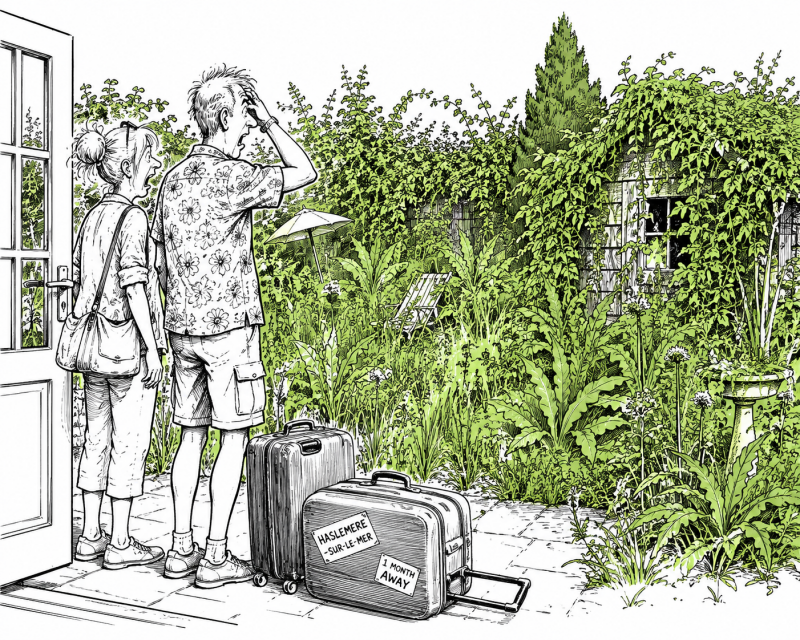
The first few hot days are really rather wonderful — we find the barbecue, locate a case of rosé, whack on the tunes and de-clothe to the edge of indecency. Then it gets hotter, and after a week, yet more burnt sausages and severe morning dehydration begin to lose their appeal. Opening the back door brings waves of trepidation and ordinary outdoor activities start requiring tactical planning normally associated with a Bank Holiday in Hatton Garden. There even comes a point where nightly you despair of Tomasz Schafernaker's entire existence.
For the past few weeks, I have scampered rat like between patches of shade, calculating whether I can get from the apple tree to the shed without being turned into KFC — those weird, cult-like Egg adverts haven't helped either.
But something is finally changing.
We shouldn't get carried away and announce the return of normal, happy, beautiful 24 degrees with a little cloud and gentle breeze just yet — welcome back Tomasz, all is forgiven, but don't do it again — but after weeks in which much of England has baked, the demon canicule* is beginning to loosen its grip.
And that means something rather more interesting than being able to wear trousers again: we are about to go back into our gardens.
*Canicule — a period of very hot summer weather, from the French term for the “dog days” of summer.
(Need help click here to contact me for a free consultation and quote)

What on Earth Happened Out Here?
For plenty of people around Haslemere, Grayshott, Hindhead and the surrounding villages, August has involved a mass migration to Haslemere-sur-le-Mer or simply abandoning the parts of the garden too far from the parasol and the fridge.
Meanwhile, the garden was stuck outside. Plants have burnt, hedges have burst, weeds have exploded and ponds have vaporised.
So when the weather becomes safe enough to wander beyond the gate again, don't assume what you will find. Walk to the end of the garden and back, look behind things and find out what survived, what thrived and what merely looks dreadful.
A plant with scorched leaves is not necessarily dead, and the brown lawn isn't demanding a funeral. The RHS advises initial caution before cutting back drought-damaged woody plants because live buds can remain on some fairly miserable-looking stems. I think the broader lesson is more useful: don't confuse the ugly with the dead — or, for that matter, the good or the bad.
(Need help click here to contact me for a free consultation and quote)

What Did the Heat Reveal?
Last week I wrote about the immediate response to the drought — clearing, watering properly, mulching and giving struggling gardens a fighting chance. If yours still needs that, start there.
But once you have, look at what this extraordinary summer has revealed.
Which plants sailed through while others collapsed? Where did the soil retain moisture? Which border became an oven? What grew beautifully without any help at all? Perhaps the slightly wilder hedge, grasses gone to seed or plants leaning into one another actually look better than the immaculate version you thought you wanted in May.
(Need help click here to contact me for a free consultation and quote)
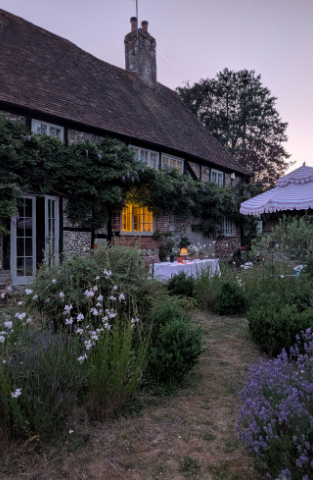
Don't Waste the Evidence
Extreme weather has effectively stress-tested the garden, exposing what works as efficiently as what doesn't. Before tidying away the evidence, use it.
And if what it has exposed is a garden that has become too demanding, overgrown, badly planted or simply no longer works for you, that is where we can help.
Garden Rescue isn't just about clearing the summer explosion. We can look at what the last two months have taught you: what should stay, what should go, what needs simplifying and how the garden could become somewhere you actually want to spend time again.
After weeks spent hiding from the weather, we finally get our gardens back.
It might be worth listening to what they have to say.
(Need help click here to contact me for a free consultation and quote)
Add comment
Comments