

For weeks now we have gawked at mirages of fluffy rain clouds — doubly sadly they were smoke — watched weather forecasts in the last-chance saloon and treated three spots of rain on the windscreen as a prelude to The Flood — miraculously this only happened at Heathrow… indoors.
The prospect of several hours of proper, determined, authentic ‘British’ (not French) rain sounds profoundly intoxicating.
But when it does fall on Slough, like friendly bombs, what is actually going to happen? When the earth has spent months being oven-roasted, plants have been surviving on pigeon dribble and gutters have filled only with dust, the first serious rain may not necessarily be the smiley emoji we crave. Like that first Peroni on February 1st, our ‘rain tolerance’ may not be what it once was.
We have spent all summer wondering when it is going to rain; that time absolutely must now be coming. The more interesting question may be what happens when it finally does.
1976
As one might expect with ‘once-in-a-lifetime’ events, we have been here before.
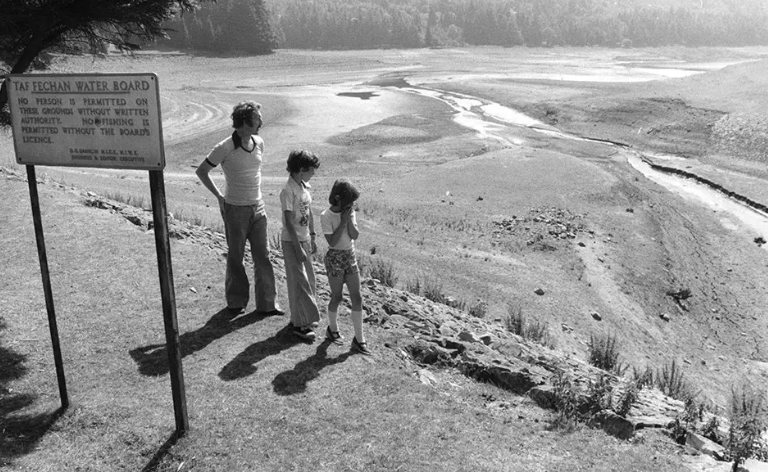
Fifty years ago the drought of 1976 was not simply the result of one spectacularly hot summer: in southern England the exceptional dry period had stretched back to May 1975, bringing water shortages, standpipes, crop failures and wildfires before the Government eventually appointed Denis Howell as Minister for Drought.
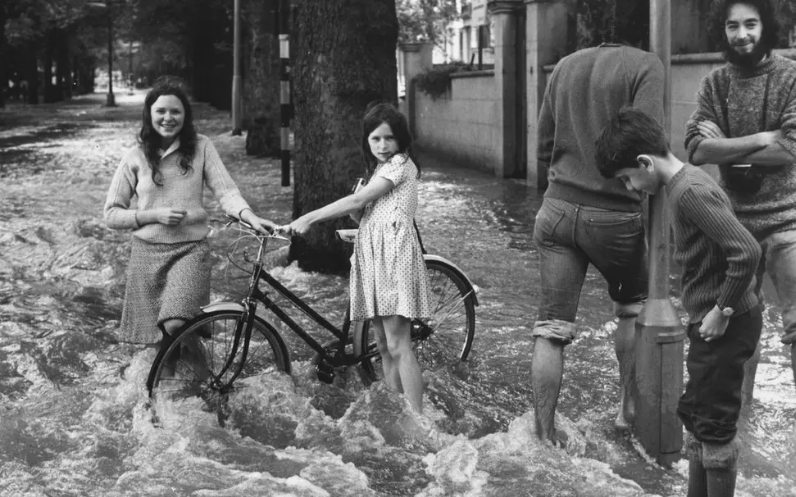
Then, with impeccable timing, it rained… a lot.
After months of restrictions and increasingly desperate appeals to save water, rain became something to celebrate. People went outside simply to stand in it. I rather suspect that when our own first sustained downpour arrives there will be people doing exactly the same — British meteorological gratitude being what it is, two wet days later and we will complain about it.
When Thirsty Ground Won't Drink
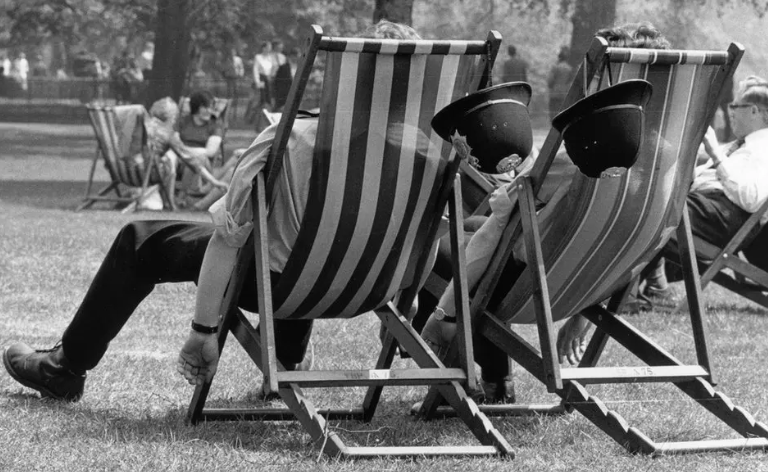
Similarly, critically thirsty land does not always greet desperately needed water aid as it should. Ground becomes compacted after prolonged hot weather and very dry soils can actually become water-repellent — a violent downpour will run across the surface, collect in hollows or disappear down the road.
A brown lawn can have puddles sitting on top of soil that remains remarkably dry underneath. Heavy rain after drought can also bring erosion and local flooding, so the great irony is that the moment when everything appears to need water most can also be a moment when the ground is particularly bad at receiving a large quantity of it all at once.
Several hours of slow and steady rain are likely to be considerably more useful to the garden than ten minutes in which the heavens empty the Atlantic over Haslemere.

But I Wasn't There...
I could tell you that the lawns will turn green, the weeds will grow, the slugs will return, the gutters will overflow and your garden will suddenly exchange one collection of problems for another. With a little effort I could probably stretch that into another thousand words of perfectly competent, entirely unoriginal gardening article.
Sometimes I write too much and, more importantly, I wasn't there in 1976. Some of you were, so why should I tell you what happened?
Did people really take the shampoo outside and wash their hair in the first heavy rain? Did children dance in the streets? Did every High Street immediately turn to mud? Did it affect your Wi-Fi and mobile phone coverage? Did roofs leak, drains overflow and gardens suddenly explode back into life?
Please share your funny, strange or remarkable memories in the comments below, so those of us who weren't there might have some idea what is actually coming when the rain finally arrives.
Add comment
Comments
Great pics, and a refreshingly articulate article Olly - many thanks for a literate and very welcome bit of writing. I was newly married in the 70’s, and with good timing had moved up to Caithness in the far north of Scotland, so our weather was unexpectedly good for that location, but we were unaffected by the droughts in Surrey. It is amazing that the gardens do manage to right themselves, and I am so grateful that the rain which gently pattered all day yesterday was just the right rain for my garden in Liss to begin absorption once again. There is much talk of “worst ever” “driest” “since records began”, but those of us that do have a few decades below our belt have definitely lived through previous droughts, floods and hurricanes reminding us that we are not in charge where nature is concerned and she has only to deviate a little from normal and serious consequences become apparent. I do think climate is changing, and I certainly believe mankind has contributed, but I don’t think humans can possibly tilt a weather cycle back into a Goldilocks perfection. Just enjoy every day to it’s fullest, whatever the weather, and certainly jump in puddles and have fun.