

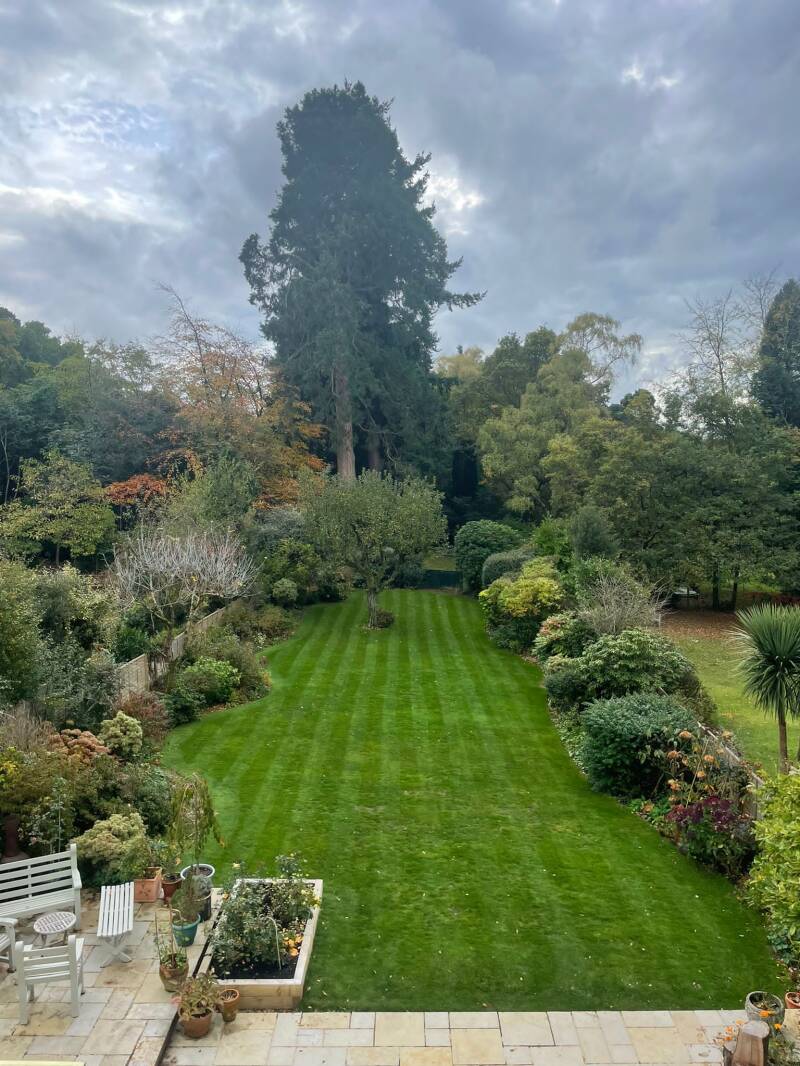
At some point in July, most of us gave up on the lawn.
The rain stopped, the hosepipe ban arrived and the grass turned from green to straw-coloured remarkably quickly. After briefly wondering whether anything ought to be done, we collectively decided that drinking water was probably more important than maintaining an outfield fit for Lord’s.
So we stopped watering, abandoned the mower and left the lawn to negotiate directly with the drought.
Now it is coming back.
September rain is drawing a green haze across the brown. Surviving grass is waking up, weeds are returning with rather more confidence than anybody invited, and the garden is beginning to look alive again.
But green does not necessarily mean recovered. The drought has left thin areas, dead patches and compacted ground that become much more obvious as the surviving grass grows around them. What we do now may not echo in eternity, but it will decide whether the lawn enters winter thickening and repairing—or merely becomes a greener version of the damaged lawn we abandoned in July.
First, Let It Show You What Survived
Do not begin by throwing every lawn treatment in the shed at it.
Give the returning grass enough time and rain to reveal the true extent of the damage. Areas that appeared completely dead can revive surprisingly quickly because established lawn grasses become dormant during drought. The leaves turn brown while the crown and roots remain alive below ground, waiting for better conditions.
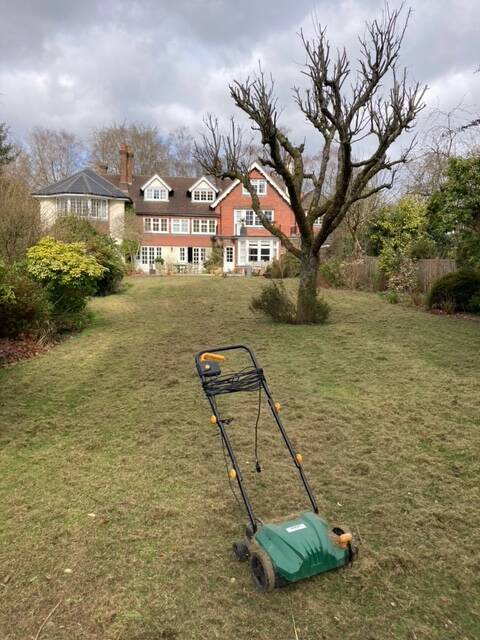
Once growth resumes, mow lightly with the blades set higher than usual. The object is to tidy the lawn and encourage growth, not punish it for surviving. Cutting too short removes the leaf the grass needs to rebuild its strength and exposes the soil just as weed seeds are looking for somewhere comfortable to spend the autumn.
After a couple of cuts, the picture will be clearer. Healthy areas will thicken, weak areas will remain sparse and genuinely dead patches will still be doing a convincing impression of the Gobi Desert — and where the 'slippy slide' was put, will be deader than the dead side of mars.
That is the moment to decide what work is actually required.
Some Lawns Need Repair, Not Resurrection
A lawn can look terrible without requiring complete replacement.
Grass plants thicken by producing side shoots known as tillers. Given moisture, warmth and reasonable soil, surviving plants can spread into small gaps and repair much of the summer’s damage themselves. This is why patience for the first week or two can save a considerable amount of seed, work and theatrical despair.
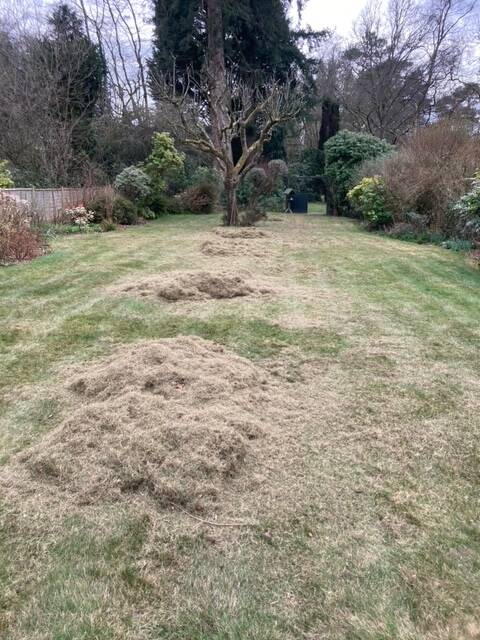
Larger bare patches need help. Remove loose dead material, scratch the soil surface, scatter an appropriate lawn-seed mixture and press it into contact with the ground. Seed sitting decoratively on top of a hard crust is more likely to feed the pigeons than rebuild the lawn. We would also recommend a mix of compost, topsoil and horticultural sand as an added accompaniment
Keep newly seeded areas consistently damp while they establish. By September, this is much easier than attempting it during summer: the soil is still warm enough for germination, the air is cooler and rainfall is doing some of the work.
Where the lawn has become thin throughout, overseeding the whole area is more useful than endlessly patching individual bald spots. Choose seed for the lawn you actually have—shade, family use, dry soil or heavy wear—not for the championship golf course you briefly imagine owning while standing in the garden centre. Augusta National has rather more staff and a slightly bigger budget - and alligators, just for a laugh — oh yeah and that fish that ate the golf ball — anyway we digress.
Buy the seed online from a specialist supplier (we have always used https://www.grassseedonline.co.uk/ - not because we are lazy and just googled it but they are actually really good) rather than automatically picking up a small box at the garden centre. It is usually considerably cheaper by weight, particularly when overseeding a substantial lawn, and the choice of mixtures for shade, drought tolerance, hard wear or finer grass is much better. Measure the lawn first: buying three decorative cartons one after another is an expensive way to discover that it is larger than it looks.
Most damaged lawns will recover through scarifying, aerating, top-dressing and overseeding. Occasionally, however, there is too little worthwhile grass left to rescue.
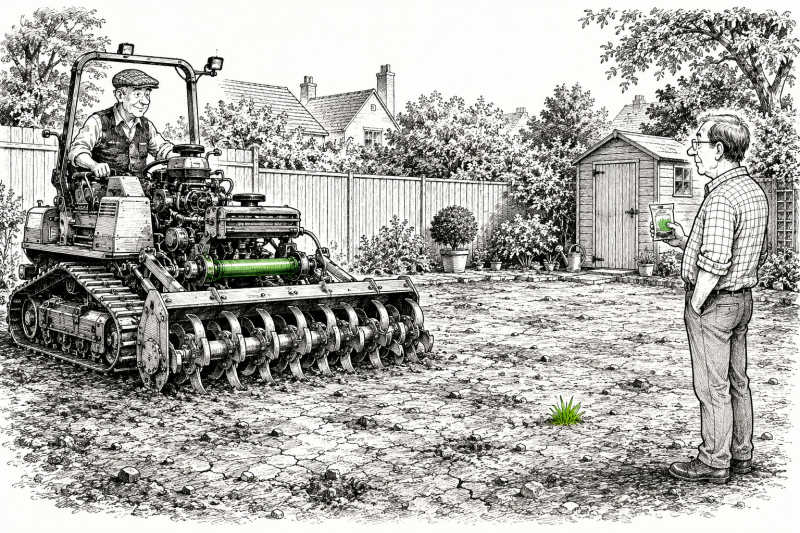
If it is really bad, well then we can go tonto with the industrial rotovators. That really is the nuclear option though.
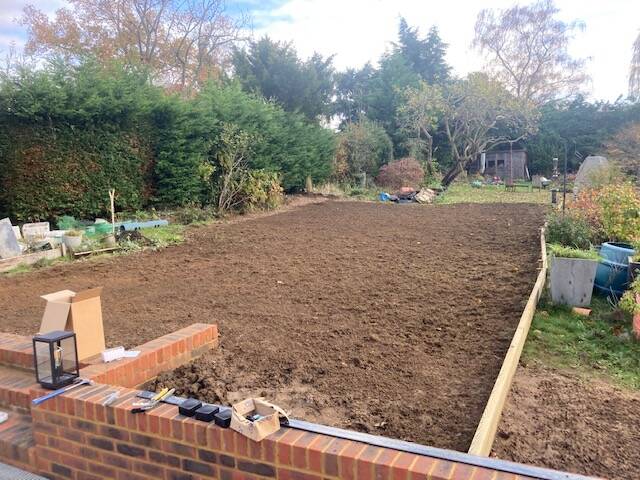
The remains can be cultivated into the ground, poor soil improved with fresh topsoil and compost, the surface levelled and the lawn reseeded from scratch. It is the difference between repairing the existing lawn and admitting that negotiations have failed. NB — we have yet to uncover a slither of treasure but should we, we retain the right to our 50% once the landowner and the crown have had their dibs.
This is obviously the larger and more disruptive operation, but a genuinely ruined lawn can be rebuilt surprisingly quickly in autumn while the soil is warm and natural rainfall helps the new grass establish. However unless the Somme is your thing, we would not recommend doing this after October (or before early February).
Open the Ground Before You Feed It
Drought does not only affect the grass. Prolonged heat and foot traffic can leave the soil beneath it hard and compacted, particularly on clay.
If rain is running across the surface, collecting in hollows or failing to soak into areas where the grass remains weak, aeration will help. Push a garden fork into the ground at regular intervals and ease it backwards slightly to open channels into the soil. Larger lawns may justify mechanical aeration (marvellous machines); smaller ones require a fork, steady progress and the acceptance that this was apparently how Saturday morning was always going to end.
Scarifying removes accumulated dead grass, moss and thatch from around the living plants. It can be extremely useful, but it should be done once the lawn is actively growing and the soil contains moisture. It is perhaps the most rewarding and surprising of all garden tasks —think of that first haircut after lockdown — oh yeah baby., that was a day! Aggressively raking a lawn that has only just begun recovering risks removing weakened living grass along with the dead material.
Once the ground is open, apply a light top-dressing and brush it down between the grass rather than burying what has survived. A mixture of screened topsoil, fine compost and horticultural sharp sand can improve the surface, introduce organic matter and help moisture and air reach the roots. Use more organic material on dry, hungry soil and horticultural sand where drainage and surface compaction are the principal problems. This must be proper washed horticultural sand—not builders’ sand left over from the patio.
Top-dressing also fills small hollows and gives new seed a much better bed than the hard, dusty surface left by summer. On badly compacted ground, brushing the mixture into the aeration holes helps the improvement reach below the lawn rather than merely giving it an expensive new hat.
After scarifying, aerating and top-dressing, overseed the thin areas and brush another very light covering of topsoil or fine compost across them. The seed needs contact with moist soil, but it must remain close enough to the surface to germinate.
An autumn lawn feed can support root development, but use one formulated for autumn rather than a high-nitrogen summer product. The aim is strong roots and winter resilience, not a sudden burst of soft green growth demanding twice-weekly mowing until Christmas.
Combined lawn feeds containing herbicide can feed the grass while controlling broad-leaved weeds, but they are not always the best choice where children and pets use the lawn. Products differ, so the instructions and exclusion period on the label must be followed precisely — This is where we would suggest using the local garden centre because you can chat to the staff who should be able to recommend the best product for your needs — we would have no hesitation recommending Avalon near Churt on this issue.
The gentler alternative is to remove larger weeds by hand and use an organic autumn lawn feed, often based on materials such as seaweed, poultry manure or other naturally derived nutrients. It is slower and will not conduct chemical warfare against every dandelion, but it can improve the soil and strengthen the grass without turning the lawn into a temporary exclusion zone. It also doesn't matter if you overload, so you wont get purple stripes that you can with herbicide.
The Lawn That Returns Does Not Have to Be the Lawn You Lost
This summer has revealed which parts of the lawn struggle first.
The patch beside the hedge is too shaded. The strip beneath the tree is competing with established roots. The sunniest bank dries out before everything else, while the route between the back door and shed has been compacted by years of being the route between the back door and shed.
Simply reseeding those areas with the same grass and hoping for a different result is optimistic gardening.
Shade-tolerant or drought-resistant seed mixtures can improve difficult areas. Aerating compacted routes, improving the soil and mowing slightly higher will encourage deeper roots - or be realistic and put down some 'stepping stones'. Some permanently troublesome edges may be better widened into borders, thoroughly mulched (we haven't mentioned it for a while), planted with ground cover or something more interesting — allowed to become something other than lawn.
Some patches have nothing to do with drought, drainage or the quality of the grass. Concentrated dog urine can scorch a lawn, particularly where a female dog repeatedly squats in the same area, although male dogs can cause exactly the same damage (just saying — before the PC pile on). Visiting foxes can leave similar patches.
There is no convincing magic supplement that permanently solves this. You can dilute a fresh patch immediately with water, repair it with soil and seed, or create a separate area for the dog—but if dogs and foxes retain free use of the lawn, a certain number of patches are simply part of the arrangement. In practical terms, you either keep them off it or learn to live with their contribution to the design.
A recovering lawn does not need to return as an exact replica of the one that failed in July. It can come back better adapted to the garden, more resilient in another dry summer and less dependent on somebody standing outside with a hose while the rest of the country is being asked not to.
Given the right preparation, autumn seed will germinate quickly, thicken through the remaining growing season and resume its work in spring. The bare-earth stage looks alarming, but it is temporary. By the following autumn, the same ground can be dense, green and striped again—rather closer to Lord’s than the scorched outfield abandoned in July.
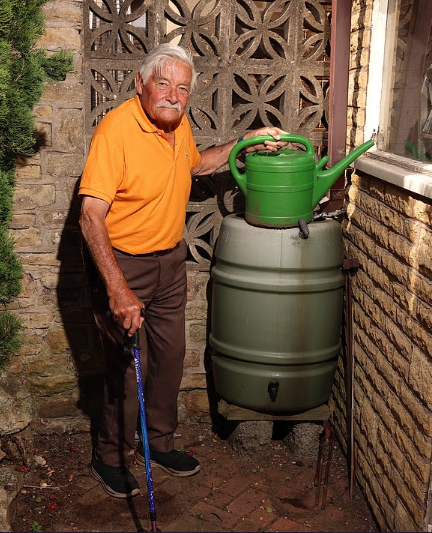
The drought won the first round. Autumn gives the lawn a rematch — and I think i is likely this seasonal variety is something we should now expect but strengthening in the early spring and autumn gives you a chance— or just be like this god darn hero featured in the first ever good news story of the Daily Mail.
Add comment
Comments