

A small warning before we start. This one is written a little differently — the structure and rhythm wander about rather more than usual, well skid, out of control, all over the place actually — because when I wrote it normally it sounded just like a whinging bicycle.
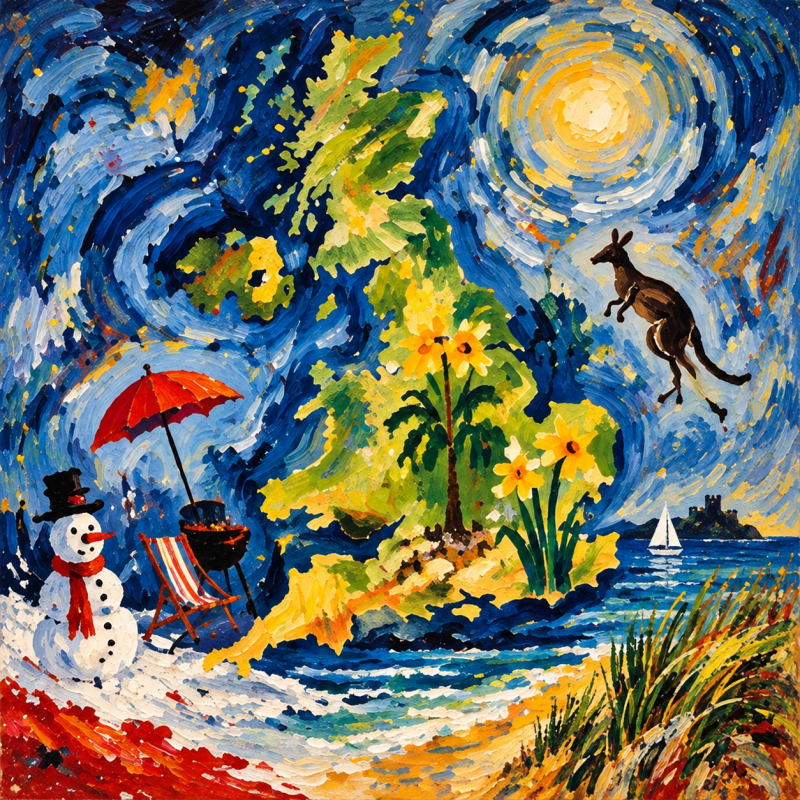
Well, bad luck, kids. Christmas has been cancelled!
Britain has apparently been transported to the Southern Hemisphere (possibly for stealing potatoes - more of that on Thursday 1st October 4pm here) and we are now actually entering spring.
Nobody remembers voting for it, but that rarely prevents these things. The clocks will still go back, while travelling forwards, and Boxing Day will now take place around a barbie where Bogan Shane “The Flamin Galah” will set fire to his mullet.
There will inevitably be further much more serious consequences. Most importantly the Ashes will obviously become a domestic fixture and Guildford and Haslemere will now be set 7000 miles apart. You will no longer be permitted to leave the house unless smothered head to toe in factor 100. Re-hydration, or water as it was once known, must be carried at all times along with an avocado in case of emergencies.
Good as! — is now actually an entire sentence that requires no further explanation or validation.
All British spiders will grow by 10,000%, develop massive teeth and begin living in our shoes. Shoes will shortly be replaced by jandals — or, even worse, thongs, which is somehow even more offensive than Americans calling trousers “pants”. If you are bitten by a grass snake, ask for a priest, not a plaster and if you go for a swim, something will eat you.
Deer will continue destroying your garden, but this time while hopping — and yes, they will look utterly ridiculous — until they bounce over and punch you in the face. Daffodils will now arrive in October, tomatoes will continue another 5 months until February, when after a quick gasper they will start to grow again and the nation’s hydrangeas will spend several years looking deeply unsettled. Garden centres will have to remove “spring” from several million promotional banners and replace it with “whenever the soil happens to be damp” and the huge drop in the price of lamb will result in Liverpool football club being only the second most famous LFC in the country (that obviously didn't work because I screwed up and changed the wrong letter but it stays in anyway as fried lamb wings are so delicious).
Sorry, actually, I read that wrong or was at best being overly dramatic. Christmas has obviously not been abolished, the ELF Union certainly wouldn't stand for it (though you might not notice if they did). Britain remains approximately where we left it and there is no immediate prospect of Jason Donovan becoming Lord King nor any of you being chewed by a wallaby — probably.
What has actually happened is rather less alarming. The Royal Horticultural Society — the beacon that guides the majority of these absurd meanderings — wants Britain to start treating autumn as the new spring.
The Great British Garden Disappearing Act
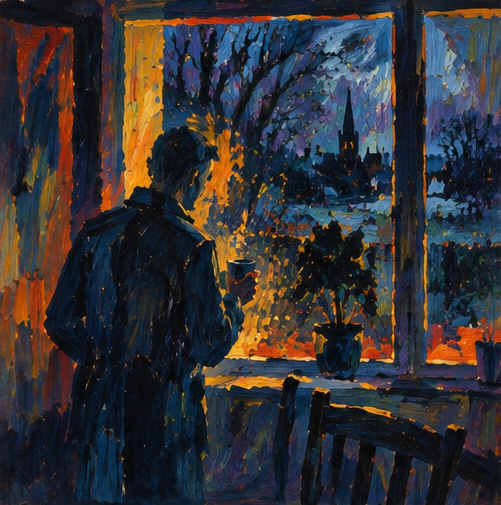
Back from your summer holiday, full of beans, you spend a couple of weekends getting the garden reasonably shipshape after the main growing season and then, sometime around the start of November, it disappears.
You leave for work at 7.30 in the morning and get home at six. You barely see it in daylight for three months. You stop sitting outside. You stop wandering around the borders. You stop instinctively kicking that ball while silently screaming Schillaci! Before long, you stop thinking about the garden very much at all.
One person doesn't.
He calls. He emails. He doesn't text — doesn't do texts.
The leaves need clearing. The borders need attention. This is the time to move that shrub you've been talking about all summer. The soil needs improving. The beds need mulching.
Each time, you say no.
Not because you know better. You don't. You simply can't see the point.
The garden isn't being used. It's dark when you leave the house and dark when you get home. Christmas is coming. Surely all this can wait until spring, when gardening starts again?
He, calmer than most, gently explains that this is precisely the point.
You still say no.
A few weeks later he tries again. This time you don't even respond.
Christmas arrives. January follows. There are no more calls. No more emails and of course never texts.
January slowly leaches into February.
Then, one morning, you pull open the curtains.
The light has come back.
(Need help? Click here to contact Olli for a free consultation and quote)
The February Reckoning
You can see the garden again.
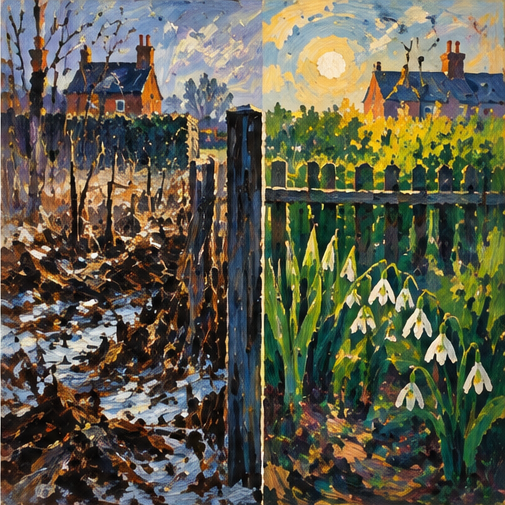
Three months of neglect have produced a cold compost heap surrounding the house. Wet leaves have collapsed into sludge. Weeds have appeared everywhere from nowhere. Dead growth swamps the borders, several branches have crashed down and the dodgy fence panel has 'fino collapso-ed'. That peculiar smell of death and decay sits, tasting bitter.
Then you glance next door.
This is irritating.
The borders are clean and mulched. Green shoots are beginning to push through the dark. There are no piles of rotting leaves, no fallen branches and remarkably few weeds. Even the lawn looks reasonably respectable. If a February garden can look fresh, this one undeniably does.
Fifty metres away, spring has arrived six weeks early.
Or are you six weeks late?
Damn — This is embarrassing.
More irritatingly still, your neighbour isn't doing anything at all.
You contemplate a day on your knees with freezing fingers and toes, trying to pull weeds from hard February ground; he is happily discussing the football and a warm pub lunch.
There is nothing much left for him to do.
He kept him working through the autumn and winter. At the time, it probably looked as though he was just fussing around a garden nobody was using.
Now it looks very different.
(Need help? Click here to contact Olli for a free consultation and quote)

While You Weren't Looking
The real problem is the idea that the gardening year ever starts or finishes.
It doesn't.
It isn't a school year with a long summer holiday and a new exercise book in September. It is an ever-spinning wheel. Spring growth becomes summer abundance; summer becomes autumn decline; autumn slips into winter slumber; underneath what appears to be winter inactivity, the next spring is already beginning to burst.
Some of the most important work happened precisely when you weren't thinking about the garden at all.
Leaves cleared before they turned to slime. Weeds dealt with before they got another season's head start. Plants moved while the ground was soft. Trees, shrubs, climbers and hardy perennials planted while the soil still held warmth and autumn moisture returned. Roots began to establish while little appeared to be happening above.
Then the beds — mulched.
Once that work was done, there wasn't much drama to see.
Under the crust, however, the most extraordinary party was kicking off. Worms and micro-bugs dancing happily through the soil, organic matter breaking down, nutrients cycling, bulbs awakening and shoots a-shooting shots.
What looked dark, dead or dormant, from behind the kitchen window, was anything but.
(Need help? Click here to contact Olli for a free consultation and quote)
The Best Time to Be Out There
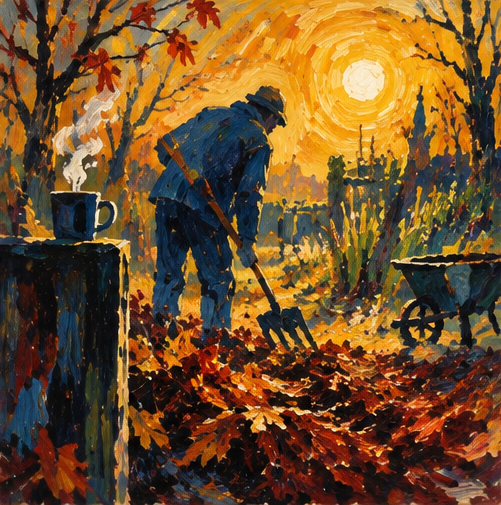
A bright November morning is the nicest time to be working in the garden.
The light is sparkling, the ground is soft, the air is cool — get outside, get some exercise and catch what remains of the warmth of the year's sunshine. Mid-afternoon the light begins to disappear; go inside filthy and tired. A steaming hot shower, then grab a seat, rosy cheeked to a rich casserole with that enormous sense of wellbeing well earnt from an early winter's day spent outside.
Wrestling the elements and achieving something worthwhile.
Not right for you though. The preference is to stop looking at the garden and abandon it where the leaves begin to fall. No point in cleaning up more than once you suppose. You'll return just as winter has finished exposing everything you failed to do. The weeds and the rot established, the borders buried, branches down and the first desperate growth suffocated by last year's mess. It's cold and drenched. It's hard, this is a bad time to need to be outside.
Then you'll call him and expect him to make it nice again. From his point of view — this bewilders.
He spent spring and summer improving the garden, looked after it while you were away on holiday, then watched quietly as the clocks changed and you wilfully abandoned both the garden and much of his work.
A few months later you want him to start it all again.
Ignoring obvious human consequences — the point was continuity.
A garden gets better because this year builds on the last. Plants establish. Soil improves. Problems are addressed not repeatedly rediscovered. He learns the ground and the plants. He improves not always just rescues.
Stop the wheel every autumn and you don't preserve the garden where you left it; you lose the progress. If you don't care — (for the whole garden through the whole year) — it is difficult to see why you deserve any of its' generous rewards when the sun and the light return.
(Need help? Click here to contact Olli for a free consultation and quote)
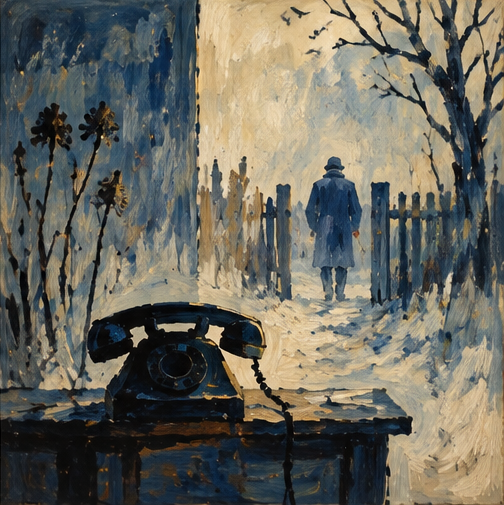
Now You Call Him
Which brings us back to February.
Your neighbour is warm.
You are not.
Your hands are freezing, the ground is hard and what should have been months of steady progress has become weeks of miserable work just to get back to the beginning.
Perhaps he had a plan.
So you call him.
It rings.
No answer.
You'll try again later.
Still nothing.
Perhaps this shouldn't be entirely surprising.
You look over the fence, then back at yours.
You try once more.
It rings out.
Unlike your weeds and the wheel — he isn't coming back.
That's when you'll know, they called him Oracle.*
*An oracle is a person, shrine or divine message believed to provide wise advice, hidden truths or predictions about the future.
(Need help? Click here to contact Olli for a free consultation and quote)
Add comment
Comments