

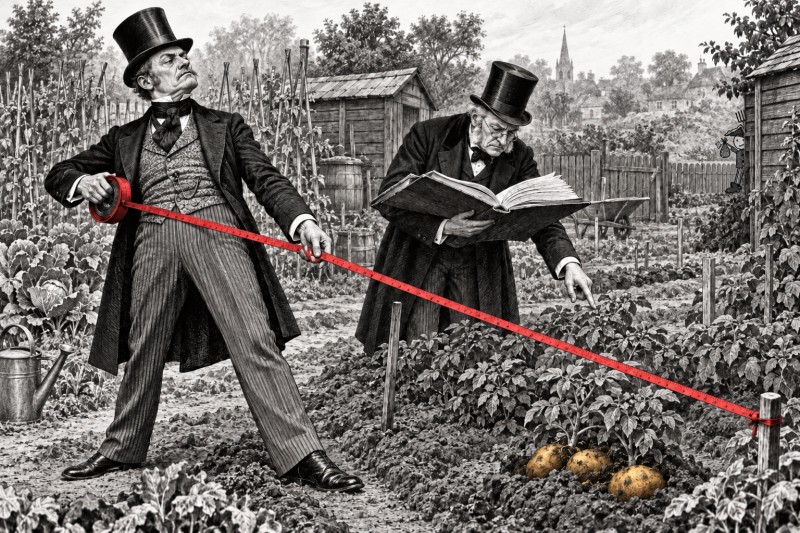
After centuries of argument and debate Britain, via Parliament, had finally defined the allotment:
''A piece of ground no larger than forty poles, cultivated mainly by its occupier to produce fruit or
vegetables for himself or his family''.
That seemed clear enough, then as we heard, somebody bought a chicken.
So what, you might think. So what indeed!
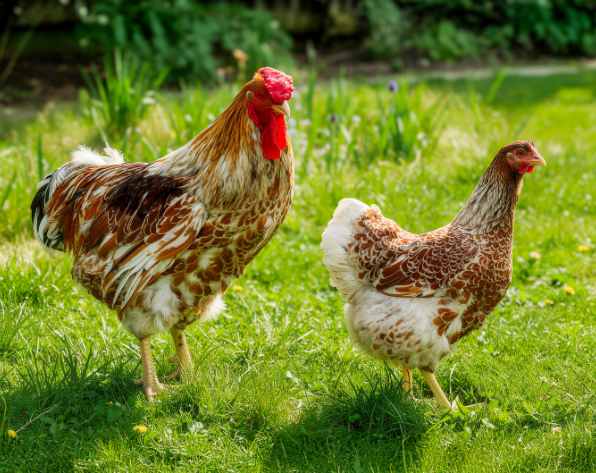
What Exactly Is a Hen?
Keeping hens on allotments presented Parliament with a difficulty.
The law could permit hens, but what exactly did that permission include? A hen was clearly a hen. A cockerel was not a hen. Yet producing further hens generally required the temporary involvement of a cockerel.
Parliament therefore found itself considering whether a law intended to help families produce food should now also admit the male bird required to create more of the providers of the foods it had allowed.
The main problem was noise. A few hens might supply eggs without greatly disturbing the neighbours. A cockerel had stronger views about everyone being ready for the beginning of the working day. Guinea fowl presented another problem: useful birds, perhaps, but capable of announcing themselves across a considerable distance and that was just their smell.
Then there was movement. An animal does not necessarily recognise the boundary between one allotment and the next. A wandering Wyandotte* could damage a neighbour's crops, distribute valuable manure without permission or simply refuse to remain within the legal area allocated to it.
Every answer created another question and that was just the start.
If hens were permitted, must cockerels be permitted? If poultry were permitted, did that include guinea fowl? If an animal was lawful on one plot, what happened when it walked onto another?
One MP illustrated the danger of incomplete drafting with the example of a notice prohibiting dogs (seems sensible). The notice would exclude a terrier, but not necessarily a baby elephant (ok that didn't last long). I don't know how big a problem baby elephants were perhaps he'd just had a nice lunch before the debate? This was unlikely to be the most immediate threat facing the average allotment holder.
However, the point remained: once Parliament began listing the animals that were allowed, it also had to consider every animal it had forgotten.
*The Wyandotte is an American breed of dual-purpose chicken, raised both for its brown eggs and for its yellow-skinned meat.
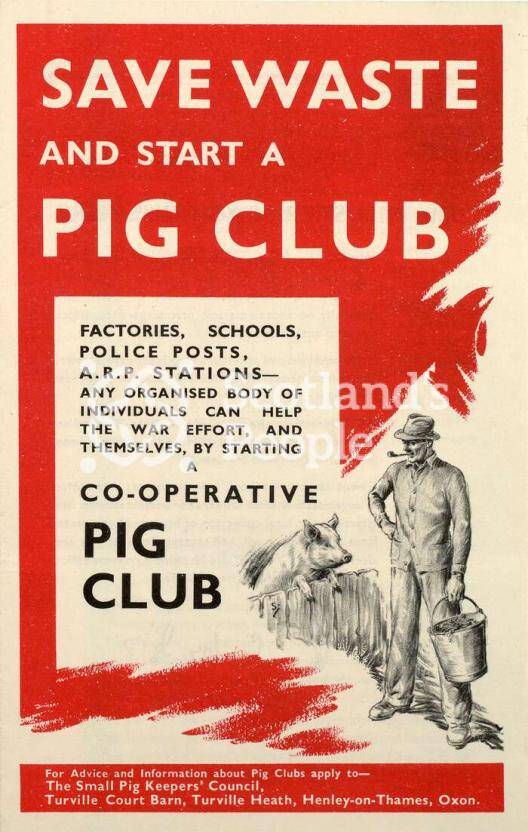
Pig for Victory
The pig enjoyed a particularly insecure allotment tenure.
During wartime, pigs were useful - indeed actual PIg Clubs sprang up. They converted scraps and waste into meat, contributed to the national food supply and became part of the patriotic campaign to produce more food at home.
The allotment pig was not merely tolerated. It was fully signed up and doing its bit. The Badsey Society has the history of a real pig club that ran from 1902–1953, including how wartime clubs worked, feeding them on waste and what happened to the meat. (On another note it also says 'Lark Rise to Candleford' was set in Oxfordshire — I was under the impression it was based on Headley and Grayshott?)
After the war, with-out the imminent threat of invasion by a nihilistic death cult, the same pig became a nuisance.
It smelled. It attracted complaints. It required housing. It produced waste in quantities beyond those normally associated with a hen or rabbit — well I assume, I haven't checked this. Its status shifted from patriotic asset to neighbourhood problem without the pig itself changing very much at all.
Hens and rabbits retained their uniforms, military pension and the Kings eternal gratitude. The pig sadly did not.
This left an odd hierarchy among allotment animals - 'Animal Farm' is a fiction! The rabbit could remain. The hen could remain — although Parliament still had concerns about her husband. The guinea fowl occupied uncertain territory — mostly because no-one would go near them. The pig, having stoically served its country, in the revolting 'domestic trenches', was shown the gate (if it was lucky) — I really don't know why Winston Churchill springs to mind here, he just does and it is grossly unfair.
Concerningly the baby elephant still remains unaccounted for.
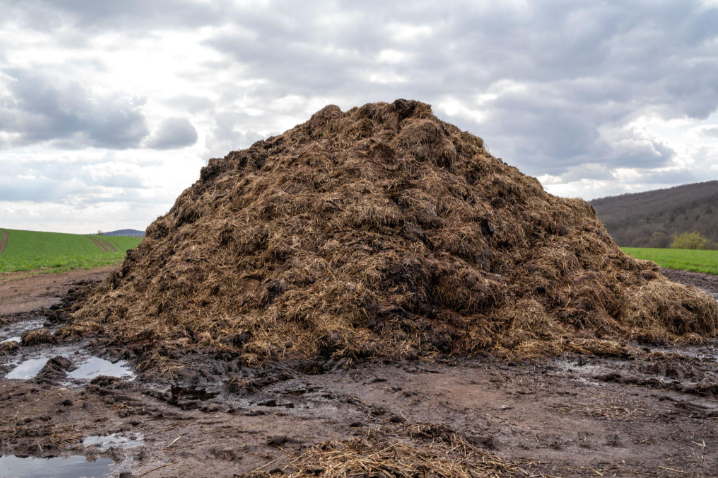
Who Owns the Manure?
Animals produced another legal problem. Quite a lot of it, in the pig's case.
Manure had value. It improved the soil, increased crops and in its' own special way represented either money spent or work performed. New legislation (yes more) meant when a tenancy ended, the outgoing tenant might be entitled to compensation for improvements he had made.
That was relatively simple when the manure had been purchased (if he kept the receipt). But what if it had been produced by animals kept elsewhere and carted to the allotment? What if it came from household refuse (I don't know if the sentence quite makes sense today)? What if its value lay not in the material itself, but in the effort required to collect, move and spread it? I would also include how 'fresh' it is!
Parliament was now being asked to determine not only which animals could live on an allotment, but who owned the value of what came out of them — you can begin to understand why alcohol seems to be so prevalent in the House of Commons.
The question was not actually trivial though. To the tenant, manure represented fertiliser, labour and next year's crop. To the landowner, it had already become part of the soil. To the legislator, it required yet another clause and debate (and bottle opener).
Parliament thought it had settled things with a man growing potatoes on forty poles of land but really It had now become bogged down in the legal ownership of pig manure (I really wanted to use another word).

You May Take Your Apple Tree with You As You Leave
The 'End of Tenancy Check' produced yet still more difficulty.and it wasn't just about whether to use professional cleaners or not.
A tenant might have spent years improving an allotment. He might have planted fruit trees and bushes, built a shed, erected a greenhouse or constructed accommodation for his legally approved hens and recently disgraced pig.
When he left, who owned any of it? (I had a similar problem with all the Farrow and Ball paint I had expended on my last rental).
The law increasingly recognised that an outgoing tenant should not simply lose the value of everything he had created, he should be adequately compensated (if only). In some circumstances, he could even remove the trees or bushes that he had planted.
This sounds reasonable until one imagines it happening.
Today, an evicted householder might arrive at a relative's door carrying a bag of clothes (a bit inconvenient and it's only for a week max — ok?). An outgoing allotment tenant could arrive with an orchard.
Removal came with conditions — The tenant could not leave the plot looking as though it had been attacked by German artillery. Any damage caused by digging up the tree had to be repaired.
The same problem applied to structures. A tenant might wish to remove his shed, greenhouse, fowl house or pigsty. Alternatively, he might leave it behind and claim compensation for the improvement. Sometimes even both but we really haven't got time to go into that can of worms.
That depended partly on whether the structure had been authorised. It also depended on whether it was really an improvement.
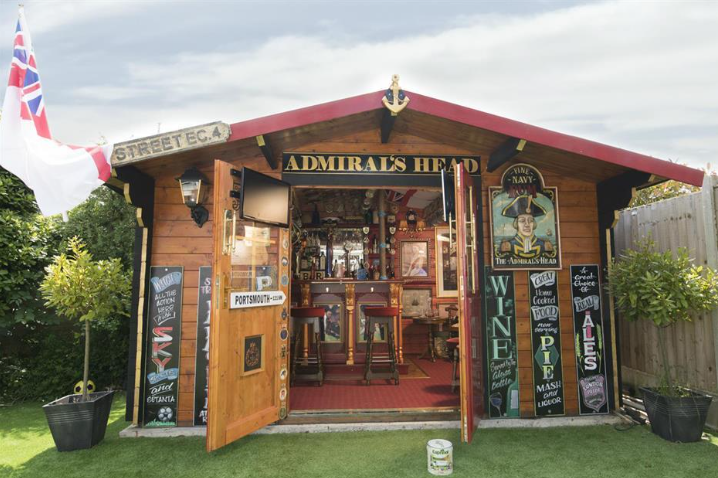
When Is a Shed No Longer a Shed?
The ordinary allotment shed is a modest thing: somewhere to keep tools, shelter from rain and conceal a chair on which no cultivation would take place but some form of libation often might.
Much as in 'lockdown' not every shed remained modest.
Allotment authorities encountered structures containing tables, chairs, kitchen ranges and chimneys. Many had been erected without permission and were later presented as improvements for which the departing tenant expected payment.
This forced another series of distinctions.
How large could a shed become before it ceased to be a shed? Did the addition of a chair matter? What about a stove? Was a chimney evidence that the tenant had crossed the line? Did the addition of a fridge, some optics and a cheap neon sign make it you look 'cool' with you own 'pub' — or are you just a desperate alcoholic who has taken to drinking in their shed because it is much cheaper and less far to crawl than from the pub ? I don't have the will or the time to continue on down that rabbit hole!
Britain began by defining the allotment. It then defined its chickens, reconsidered its pigs, valued their manure, regulated the removal of apple trees and discovered that somebody had effectively built a kitchen (or a secret drinking hovel sorry 'home pub').
However if the rules were mind-bendingly elaborate — the punishments for falling foul of the Allotment Police were worse.
Add comment
Comments